10 May, 2011

If we were eligible...

Yesterday I posted the travel writing competition winner.  Today the End of Term Party continues with the ICLC's entries into the photo competition.  Of course we can't enter the real competition, and we probably wouldn't win if we did.  My caveat is this: Bill, Sarah and I like taking strange photos.  It keeps our lives interesting.  You know you do it, too.
People: A hard day's night for Claire.  I had to choose between coloring in John Lennon's face or a yellow submarine! (photo entry by Bill)
Architecture: Look what returned back home to the ICLC this weekend!  Sadie, you're off the hook and I hope you put that toaster bag to good use.  No more cold cheese and jam sandwiches for us! (photo entry by Claire)

Landscape: William Shakespeare was married to Anne Hathaway in a shotgun wedding.  Their first child, Suzanna, was born 6 months later.  Rumor has it Suzanna was conceived in the bushes somewhere between Stratford-Upon-Avon and Shottery, a small village to the west of Stratford where Anne's family lived.  Has Bill found that bush? (photo entry by Sarah)

Bill, Sarah, Heather and I hope you all miss us already!  We had a great time this spring!

-Claire 

09 May, 2011

Be Fearless

It's that time of the semester again.  Suitcases are packed, flats are cleaned and emptied and students trickle out of London.  Also, the semester's travel writing winner was announced at the End of Term Party this past Friday!  Turned into this week's guest blogger, we would like to congratulate Michele Fortier and her fearlessness.

My finger hovered over the “Purchase” button, hesitating as my brain ran through every possible challenge and scenario I might soon encounter if I clicked it.  The possibilities were endless, an entire world of problems could arise, and yet, I knew if I did not do it, I would regret it tremendously.  My finger trembled as I clicked the button; there was no going back now.

I had just purchased a roundtrip ticket to Positano, a small cliff side town on the Amalfi Coast in Southern Italy.  It was the first time I would be traveling alone to a country I had never visited before with a language I could not speak.  On every past trip I had undertaken, I always traveled with the security of my friends, depending on them to obtain maps and decide where to go.  I was always the follower in the group, not the leader.  Suddenly, I was putting myself into a situation where I had no one else to rely on so if anything went wrong, I had to take care of it myself. To say I was terrified would be a huge understatement.

The morning of my departure, I sat in the airport, my heart pounding from nerves and my mind racing on overdrive.  I was as ready as I would ever be.  This was it.  Time to throw myself into the unknown.  “Be Fearless.”  That would be my motto.  I even wrote it out on my hand as a reminder.

I flew into Naples in the early afternoon but I still had to catch two buses before reaching my destination.  If I missed either bus, I could very well end up stranded without any back up plan and no way to reach my hostel.  My preplanning, however, had helped as the entire journey went off without a hitch.  At 7:30pm, I climbed down from the bus in Positano, Italy, just in time to see the last few moments of the sunset. 

After unpacking in the hostel, I sat in the common room eating some delicious Italian pizza wondering “Now what?”  What exactly was I going to do for the next four days?  I had chosen Positano because I was tired of visiting city after city; they had all begun to resemble each other in an undistinguishable mass.  I had chosen this town because I wanted time to rejuvenate myself and avoid crowded streets, time to immerse myself in a culture that was not entirely stifled by modern tourism.  Yet, now that I was here, what exactly was I going to do?

It was at that precise moment when I met Hannah, an Australian girl studying in Leeds, England, who had taken the weekend off to travel through Italy.   As I sat there, eating the last slice of my delicious pizza, she told me of her adventures she had had in Positano.  She told me of the places she had been to and the people she had met.  I was envious of all the exciting things she had done.   I desperately wanted to have adventures like that, but I was unsure of where to start.  Then, she offered me a solution. 

“Hey, I met some Italian guys while I’ve been here who are taking me out for dessert later tonight, care to join?”

My initial thought was to reply with a polite, “Thank you, but no,” as I had always been a cautious girl who never went off with strangers, especially alone in a foreign country.  But for some reason, I couldn’t let those words pass from my lips.  I couldn’t shake the motto I had scribbled on my hand: “Be Fearless.”
Before I could even allow my over-analytical brain a second to consider all the possible outcomes of this evening, I replied, “Sure, I’ll come,” and sealed my fate.

That night was the beginning of a brilliant weekend.  I spent the evening with some locals, had my first sip of the local favorite drink, Limoncello, and tasted four different mouthwatering desserts.  I returned to the hostel that night exhausted and happy, excited to see what the rest of the weekend would hold in store.

I spent the next day by the beach, writing in my journal as I allowed my pale body to soak up the hot Mediterranean sun (a decision I would later regret as I rubbed aloe lotion onto my lobster-red skin).  While growing up, I had always had a deep connection to the ocean, and being here cleared up my mind and made everything beautiful.  The power of the waves lapping at my toes complimented itself perfectly with the peace I finally felt in my mind.  Everything was perfect.

Over the next two days, I became closely acquainted with Positano and all of the beautiful things available in this town.  I walked to and from the beach (approx 800 stairs one way) four times over those two days, much to the dismay of my calves.  I watched the sunset on the beach, explored every part of the town, ate my fill of Gelato and Pizza and met many other travelers staying at the hostel. 

On Saturday night, I sat around a large table on the hostel’s terrace with other travelers and shared drinks and anecdotes.  We laughed about our craziest travel experiences and discussed the differences in our cultures.  I met people from Australia, US, Spain, Italy and Thailand.  They were all so friendly and outgoing; after just one evening, I felt as though we had known each other for years.  We all went dancing by the beach until four in the morning and spent the long walk back to the hostel laughing and sharing stories as the sun came up.  We had become such a close-knit group in such a short time and I silently dreaded Monday morning when I would say my goodbyes. 

That Monday came far sooner than I had hoped and expected, and before I could even wrap my mind around what was happening, I was seated on a bus headed back to Naples Airport.  I watched as Positano faded into the distance, quickly becoming hidden behind the cliff side.  I tried to hold back the sudden tears I could feel welling up in my eyes.

I wanted to stay in this town and hold on to every amazing experience.  I wanted to relive every second and bask in the amazingly liberated feeling that had come with my independence.  I realized how much I had missed on other trips when I had failed to explore, meet people and befriend locals because I was so stuck in my safety net of friends.  This weekend had shown me what amazing things could happen when you just let go of everything holding you back and just dive in, headfirst. 

I suddenly felt empowered by this new realization.  I could do anything and go anywhere; all the strength I needed was inside of me.  On that bus ride back to the airport, I began planning my next trip to Italy.  I would come back to Italy, of that I was certain.  As I glanced out the window at the crystal blue waters of the Amalfi Coast, I was struck with one last lingering thought about this weekend:  I had been Fearless.

04 May, 2011

Politics and Sports do mix - OR Should I AV or not?

British politics seems to intrude on our ‘end of semester’ activities every spring term. It might be London local elections, Parliamentary elections [as it was in spring 2010] or the debate about the fairness of our electoral system, or the AV vote, this May.

Outside Gloucester Road station this morning, advocates of both the current ‘first past the post’ voting system and the challenger ‘alternative voting’ system were distributing literature and answering questions.  While the May 5th decision hogs the front pages, the football issue dominates the back pages.  In May 2011, front and back pages are unusually linked. Here’s how.

As a non-citizen voter in this country [explain that paradox of democracy], an historian,  a subject [of sorts] of Her Majesty, and, above all else, a keen follower of just about every imaginable sport except ‘netball’ -  which I will ban if anyone ever gives me a position of authority in the world of sport - I will carry my brain to the local polling station tomorrow morning, show my ID to the attendants,  and scribble an ‘x’ in one of the boxes of the voting slip. But the question remains ‘to AV or to not AV’! 

The AV question is the culmination of a long debate about the nature of British democracy. Power first rested with the monarch; then the aristocracy or lords dominated; latterly, the COMMONS has been to the fore, but how representative is the COMMONS?

I’m all in favour of democracy, although I do admire the ancient Athenian principle that anyone who put himself [no ‘herselves’ were possible in ancient Athens] up for election was automatically barred from consideration. THE British have long kept faith with their medieval institutions.  At Runnymede [near Windsor] in 1215, the mighty barons and the moneyed elite of the City of London forced King John to fix his seal to the ‘Great Charter’.  British ‘liberties’ led a charmed life for the next 500 years. During the middle ages, some of these ‘liberties’ were eroded, the Tudor & Stuart monarchs tried to turn back the clock and restore absolutism, but the stubborn English dug in their heels, committed regicide, experimented briefly with republicanism, until in 1688-89 a ‘protestant wind’ combined with John Locke’s  treatises on government consolidated our constitutional monarchy. Even the newly imported German kings, all handily named George, couldn’t stop the relentless tide of democracy.  Parliament eliminated rotten boroughs, extended the franchise, Lloyd George and the Irish issue undermined the authority of the Lords, the First World War granted the suffragettes their wish, ‘first past the post’ defeated the Nazis and then created the welfare state, the European Union eroded sovereignty, and now we are voting for AV, an issue forced on the Cameron government by their junior partner, the Liberal Democrats.

The bonus of AV is that the Commons becomes much more truly representative of popular will.  A disadvantage is that smaller parties, often with unsavoury policies, might get a degree of power and influence they would not ordinarily have.  Of course, a similar situation could occur under the current system; the Ulster Unionists, for example, had undeserved influence under John Major’s premiership in the mid 90s.

As for ‘first past the post’ or the ‘winner takes all’ position, there is a sense of natural justice about it. In a 1500 metre race run by 25 competitors, there is only one winner.  In the Grand National or Epsom Derby, the judges don’t bother with the 4th, 5th, 6th finishers. However, in some sports, like tennis, ranking points are given to all players depending on where they finish in a tournament. Ranking points impact on seeding, and seeding confers an advantage. In baseball, the team with the best record after 162 games might win a divisional pennant, but not the big prize. The same applies in most professional sorts, except…

PROPER FOOTBALL. The team with the most points at the end of the season is the winner. Period. Finito. NO OTHER CONSIDERATION COUNTS.  I believe that we need to amend this flaw at the heart of sporting culture because I won’t be able to accept Manchester United winning their 19th title. Nor will I be ‘over the moon’ if Roman Abramovich’s billions buy Chelsea the title.

So I need to know the answer to two questions.  Which form of sporting AV will guarantee that 3rd place Arsenal win the Premiership and which form of AV will ensure that QPR, already winners of the Championship under the first past the post system, remain winners even if the FA illegally dock them points for a supposedly dodgy player transaction two years ago.

For readers looking for bias in this blog, there is none. The RBBDA [the Royal British Bias Detection Authority, honorary president, HRH the Duchess of Cambridge] has given this blog its ‘A’ rating. Front and back pages of our newspapers well and truly united

-Bill

28 April, 2011

"The Fever" Strikes the ICLC

For the safety of everyone, I would like to put out a warning that there is a minor health risk at the ICLC.  Symptoms of the condition include, a compulsive need to mix in the mass of people in central London (masses which are growing by the minute!), urges to buy tacky memorabilia and facial twitches that resemble excitement.  Yes, Wedding Fever has penetrated our defenses.  William and Kate are getting married and people are traveling the world to see it happen.  We tried to hold off "The Fever" as long as possible, but with ground zero of the outbreak being in the UK itself, we're lucky to have held out so long.
Examples of 2 main symptoms shown here: excitement and tacky memorabilia

The latest victim to be claimed is our Director, Bill Sheasgreen.  In most cases the symptoms are only temporary, and usually dissipate over time (though it is unknown how long they may last).  No cure has been found, and most people are told to wait out the symptoms and hope for the best, but with the fever spreading across the world since last October, it is thought that it will reach epic heights on Friday April 29th, 2011. 

Our thoughts are with Bill as he struggles through the fever.  We are pleased to say that Wedding Fever has not affected Bill's ability to direct the London Centre, it has only caused him to put up contentious decorations in the ICLC.  Sarah and Claire have remained immune throughout the ordeal and hope to continue that way.

-Elsie (who is safely quarantined)

14 April, 2011

Crossing the Border: Scotland

One of the most asked questions students pose when preparing to go to Scotland is, do I need my passport?  There is indeed a border between England and Scotland, but, along with Wales and Northern Ireland, these countries are all part of the United Kingdom of Great Britain and Northern Ireland.  This question put to Brits probably sounds the same as asking an American if you need to show your passport to travel from New York to New Jersey.  No passport is required for either of these border crossings.

Slightly less popular as questions about traveling to Scotland go is, do I need to change my money?  Another no is the answer to this question.  However, you will notice in Scotland that the notes look different.  £10 of Bank of England notes has exactly the same value as £10 of Bank of Scotland notes, £10 of Royal Bank of Scotland notes and £10 of Clydesdale Bank notes.  Yes, there are three banks in Scotland which have the right to produce money, versus one in England, one in Ireland and none in Wales.  All pound sterling notes are acceptable in all parts of the United Kingdom.  Scottish notes are often faced with skepticism in London because they are popular with counterfeiters trying to pass off fake money, but real Scottish notes are unquestionably viable.

My favorite question is, what did that person say?  Some Scottish accents can be difficult to decipher by an untrained ear, but there is every chance that that person really did say, "Deep fried Mars Bars are delicious".  It's a Scottish delicacy and well worth a try!
Bill is seen here preparing a Scottish feast, complete with haggis, Irn-Bru and Mars Bars for deep frying.  The flags in the background give extra Scottish flavour.

-Elsie

05 April, 2011

Keith Moon's plaque at 35 Harrington Gardens

For everyone who was duped into thinking that Keith Moon really is having a blue plaque dedicated to him at 35 Harrington Gardens, here is a rebuttal:

Yes, the ICLC has a truly rockstar past.  There was the time that the Beatles performed their last live performance together on the roof.  No, that was at Apple Corps at 3 Saville Row.  There was the first Live Aid Concert in 1985.  No, that was at Wembley.  There was the broadcast of the music video for Video Killed the Radio Star at 00:01 on 1 August 1981.  No, that was MTV.  Perhaps the rockstar history of 35 Harrington Gardens is a bit more checkered that we had originally thought.  Or perhaps the rockstar history of 35 Harrington Gardens is non-existent.  Did Keith Moon really live here for a short time?

Bill's very plausible fabrication needs to be broken apart to find the holes.  Foremost is the issue of the plaque, itself.  To have a blue plaque put up, you must petition English Heritage.  It can take months, even years to have your petition succeed, and very few do on their first try.  Its sticking point is often the proof required.  Petitioners must submit "Memories" of the person's relationship to the property.  If the person was associated with the property within the last 70 years, then there needs to be "testimony in the form of affidavits from at least 2 unrelated, living sources" who recall the person's presence there.  If no one can be found to give living testimony, then proof of the search's trial and failure must also be delivered with the petition. 

The next step involves the land registry.  If the person resided at the property this information will need to be gathered from there, a process which costs £150 per request.  I imagine we can afford this expense, but it's something to be taken under consideration in comparison to how successful the applicant thinks their petition will be.  These steps can take at least 2 years to complete in some cases.  It's plausible that Bill might have begun this process as one of his initiatives when he became the Director of the London Centre in 1997.  Also, when English Heritage puts a plaque up, it is incorporated into the structure, often involving cutting back into the brick work.  35 Harrington Gardens is a Grade II listed building, which means that we are not allowed to tamper with the exterior of the building.  To get a dispensation to do so is laborious, as only 3 are given per year.  South Kensington, being one of London's poshest areas, has a full history of notable personages.  Having checked with the council, the waiting list for a dispensation is 61 years.  That means that this petition would need to have been started some time before 1950.  Keith Moon wasn't even born until 1946.

Bill, this was one thorough April Fools joke, but we have now seen through it.
W. S. Gilbert's plaque is a recent addition to Harrington Gardens.  I can only imagine how long the neighbors waited for their dispensation.

-Claire (Elsie's plaque should be arriving one of these days)

01 April, 2011

Our Mystery Lodger About to ‘Come Out’

You will have noted that Claire was not at her desk for a week. You might not know where she was or why she was away. The answers are: she was in the USA; she went to Ithaca for the orientation of the summer and fall 2011 groups. The next question is - why wasn’t I doing orientation in the USA? You will also note that, unusually, I did not go on the Wales trip last Friday. The answer to these questions is bound up with an administrative detail that I can now reveal - at least in part. I needed to be here to finalise details of a celebration that will take place here next month.

It begins with an invitation. First, Claire will be looking for 6 work study volunteers to work a special event on Wednesday night April 20th. Second, a lucky 20 of you - names to be drawn from a hat*** - will be invited to the London Centre to a social gathering with speeches, etc.  Sounds boring, but it won’t be, because a piece of rock and roll history of swinging 1960's London will occur that night. The IC Board of Trustees, in cooperation with English Heritage, and with the encouragement of the Mayor’s Office for London and London 2012 [Cultural Olympiad], has agreed to the placing of a ‘blue plaque’ on the front of our building.  There will be press here, acquaintances of the person to be honoured, and representatives from the home campus including a reporter from The Ithacan.. The project is also part of London 2012, creating more opportunities for tourists to explore interesting parts of the city when not at the Games. [The week after, English Heritage will again be in the area unveiling a plaque to the Irish writer, Samuel Beckett, who lived penniless in a room on Wetherby Gardens in the 1930s.] For an example, see the plaque to W S Gilbert on number 39 Harrington Gardens.

What’s happening?  Kensington & Chelsea records reveal that a well known rock musician, who died in the 1970s, lived and worked at 35 Harrington Gardens between May 1965 and April 1968. He was even arrested here in 1966 after a police raid found illicit substances on the premises [you can read about it in the September 15th, 1966 edition of the Kensington Chronicle.] He was not the only such 1960s rocker to live nearby. Brian Jones, the first leader of the Rolling Stones, lived at number 15 Courtfield Road [one street north of us] in the 60s and John Lennon, his first wife, Cynthia, and  baby son, Julian, lived at 9 Emperor’s Gate [now demolished] just the other side of the Cromwell Road. A blue historical plaque, placed just over the window of Claire’s office will be unveiled at 5 pm on April 20th.  The Lady Mayor of the Royal Borough, Councillor Janice Roberts-Smith, will unveil the plaque, along with a member of the IC Board of Trustees and one of the deceased rocker’s fellow band members. I‘m not at liberty to tell you who, but I can give you a hint. Even I have heard of this band, although I don‘t own any of their music. CLUE: There are 3 surviving members of the band, one with the first initial ‘J’, one with the first initial ’P’ and the un-veiler has the initial ‘R‘. The first 6 letters of the name of one of our faculty members are also the first six letters of the musician’s name. THE FIRST TO GUESS THE IDENTITY OF OUR MYSTERY LODGER GETS A FIVER.

The deceased musician never married, but had a string of girlfriends during this period, one of whom, bore him a son in July 1967. She lived in number 35 for 13 months and raised their child here for the first 6 months of his life. [Unfortunately much like Cynthia Lennon who came upon John bunked down with Yoko Ono in their Surrey mansion in 1967, our hero (?), like a true rock star, was something of a philanderer who was often found with his trousers around his ankles. She left him and went back to her native Germany where she raised her son and became good friends with Astrid Kirchherr, the 5th Beatle Stuart Sutcliffe’s fiance.]

The highlight of the evening from my perspective is that the woman will do a mini walking tour of the building explaining the layout of the rooms in her period of residence. So on April 20th, we will know where the master bedroom was [was it room 5, 4, 2??] where the music rooms were, and where the parties were held [has to be the common room].

Hope you’re one of the 20.

***NB. Attendance at a play or musical event, backstage tour etc., takes precedence over the event.

-Bill
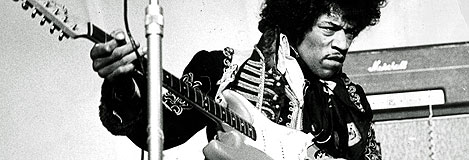
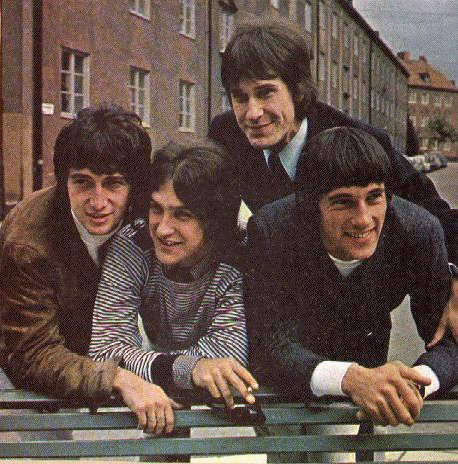
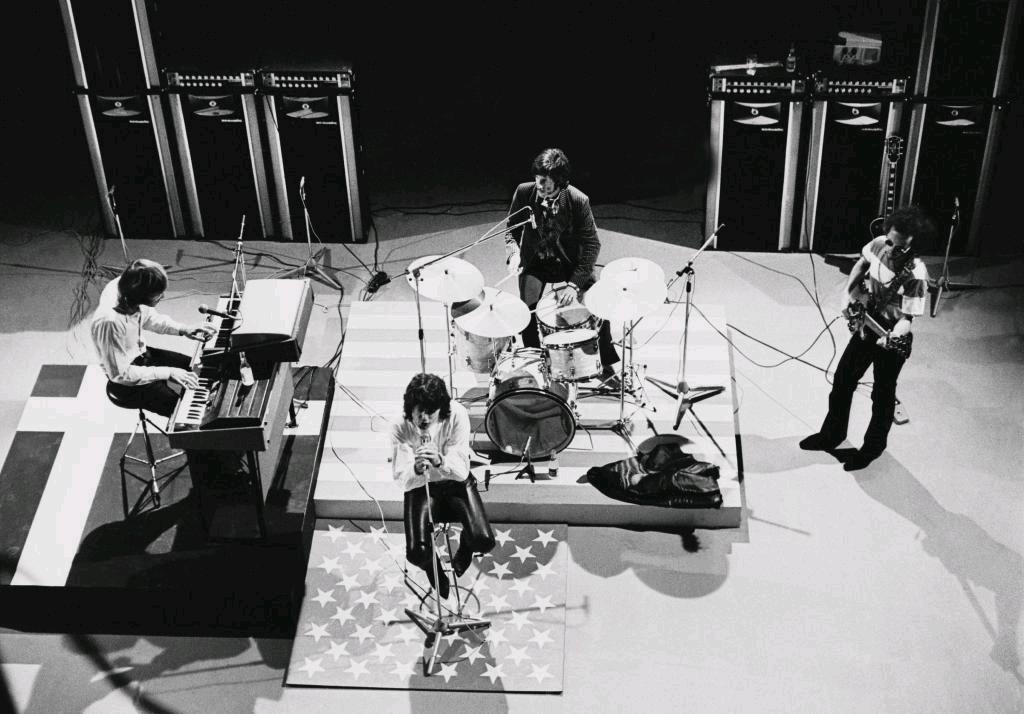
Could it be any of the well-known artists shown here?

Previous Posts